Nursing home abuse lawyers try their best to advocate for the elderly victims of abuse and neglect, the victims who often can no longer defend themselves against these predators.
Amanda Tibble, 36, who used to work as a certified nursing assistant at the John M. Reed Nursing Home in Limestone, Tennessee has been sentenced to 15 months in jail. Tibble was fired from the home when allegations of physical, emotional, and verbal abuse from January 2010 surfaced. She has since plead guilty to four counts of willful abuse or neglect and admitted to mentally abusing two patients. She has also been accused of twisting a male patient’s hand and bending back the hand of another patient. Tibble admitted to having an anger management problem and recently said “I do apologize for my actions and I do, you know, hate that it caused the mental anguish on her that it did.”
Judge and Victim’s Family Do Not Believe Apology
The family of Anza Hall, one of Tibble’s victims, said “We’ve waited well over a year and a half to get justice served.” The 90-year-old paralyzed stroke victim would tell her family “Don’t make them mad, don’t make them mad. They’ll be mean, they’ll be mean.” Because of the non-believable testimony from Tibble and the testimony of Hall’s daughter and granddaughter, Marcella Hall and Carla Anderson, Judge Robert Cupp gave Tibble the maximum sentence. Hall and Anderson said they didn’t believe Tibble felt any remorse for the incidents.
Nursing Home Abuse Lawyers in New Jersey and Philadelphia
If your loved one is currently a resident of a nursing home or care facility, pay attention to the quality of the nursing staff. If you are worried that the care they are receiving is negligent, abusive, or inadequate, contact the Mininno Law Office for a free case evaluation. You may also call for a free consultation at (856) 833-0600 in New Jersey, or (215) 567-2380 in Philadelphia.
 Some lawyers who have represented defendants in these sorts of cases have come forth with surprising, if not shocking, legal arguments to avoid liability. Some attorneys in this situation have argued that there can not possibly be negligence because that tort requires a duty and a breach of duty. The argument follows that a defendant could not have possibly had a duty of care towards a being that is not yet born. This approach is very rarely accepted because it sets forth bad public policy and it tends to disregard the values we tend to hold as a society. Negligence that harms an unborn baby is just as undesirable as

 Under the respondeat superior theory, a theory that applies to many employer/employee relationships, the healthcare provider must be employed by the hospital. In order for a hospital to be liable under respondeat superior, the negligence must occur
  The main goal is to determine whether the law is truly holding only negligent doctors liable while finding that on occasion, bad results do occur in the medical profession even when good doctors are providing treatment. Lawyers believe that the possibility of legal resolutions and potential lawsuits should result in doctors using safer procedures, better diagnostic tests, and more extensive fact finding before providing treatment. The law should also urge doctors to follow the “customary practice” standard which would discourage doctors from using untried and dangerous treatments as opposed to what is generally acceptable in the field. Finally, it is the hope of patients and medical malpractice attorneys alike that the possibility of a lengthy litigation process will push doctors to adapt and change with the profession rather than sticking with their old ways when new approaches are readily available.
 Expert testimony is not necessary to prove a plaintiff’s case when the negligent conduct of the doctor was a matter of common knowledge. One example that constitutes a “matter of common knowledge” is all too frequent in medical treatment today. This example involves a surgeon who negligently leaves a foreign object inside of a patient, such as a sponge, following a medical procedure. Expert testimony is not necessary to prove that the doctor breached his duty to the patient when he began the procedure. A layperson
 One important case regarding medical malpractice was Hickson v. Martinez from a Texas appellate court. That court held that doctors must act as prudent and reasonable doctors in the same or similar communities would. This ensures that no matter what healthcare provider a patient decides to go to for treatment, that treatment will be relatively similar. Another important case comes from Indiana and is cited as Vergara v. Doan. That court held that a doctor must exercise the degree of skill, care, and proficiency that would be exercised by reasonably careful, skillful, and prudent doctors who are placed under similar circumstances. That court said that the locality, different advances in the profession as a whole, the availability of facilities, and whether the healthcare provider was a specialist or a general practitioner are all to be considered. The final case that illustrates this aspect of the law comes from Mississippi. In Hall v. Hilbun, the court viewed the locality expansively, taking into consideration doctors across the United States who have similar facilities, services, equipment and options available to them. Medical malpractice attorneys have found that regardless of the technical criteria of a jurisdiction, doctors should hold themselves to the acceptable standards of other doctors in similar situations.
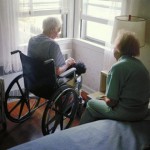 We write a lot about shocking and extreme cases of elder abuse and neglect. But we want to remind you that, as