As New Jersey and Philadelphia lawyers specializing in nursing home abuse and neglect cases, it is important to remind everyone of a common form of nursing home abuse and neglect, the occurrence of bed sores. To help prevent the painful and dangerous bed sores from forming, certain things are vital in a nursing home patient’s care. One of the most important factors is the proper positioning of the patient.
Repositioning Wheelchair Bound Patients
 For those patients that are wheelchair bound, there are certain helpful recommendations for proper repositioning. An attempt should be made, by the patient, to move every 15 minutes. Nursing home staff should help assist with larger changes every hour.
To assist in this process, patients can utilize specialized wheelchairs. These pressure-release chairs tilt to redistribute pressure. This helps provide some assistance in repositioning, and thus give pressure relief to help prevent bed sores. Sometimes, appropriate cushions can be helpful. They are generally gel, water, or air filled. These cushions assist in alleviating pressure and ensuring proper positioning while in the wheelchair.
A wheelchair bound patient in a nursing home should have a set care plan to make sure that proper repositioning takes place. A nursing home physical therapist can advise the patient on proper cushion positioning, and can give lifting and upper body movement exercises to help assist those patients that are able to reposition themselves.
When a wheelchair bound patient isn’t properly and regularly repositioned, bed sores are an almost certain outcome. Bed sores are harder to treat than they are to prevent, so it is imperative that nursing home staff take this movement very seriously. Those that do not are truly showing an abusive and neglectful attitude to their patients.
Nursing Home Abuse Attorneys in New Jersey and Philadelphia
If your loved one is a resident in a nursing home and you fear that their well-being is in jeopardy due to abusive or negligent care, contact the Mininno Law Office for a free case evaluation. You may also call for a free consultation at (856) 833-0600 in New Jersey, or (215) 567-2380 in Philadelphia. Let the nursing home abuse attorneys at the Mininno Law Office answer any questions you may have regarding your legal rights and your next step.
 Frequent changes in the patient’s positioning is supreme in the prevention of painful and potentially fatal bed sores or pressure ulcers. But repositioning offers no benefits if it’s not done properly. The nursing home caregivers must make sure that repositioning avoids stress on the skin. The nursing home staff must also make sure that vulnerable areas, such as knees, ankles, and hips are carefully placed. It is also important to regularly inspect the skin for the slightest irritation that can lead to a bed sore.
 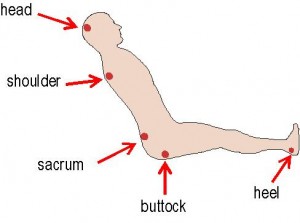 Bed sores result from prolonged pressure that prevents proper blood flow to tissues, which, in turn, kills that tissue. The death of this tissue most often occurs when it is compressed between a bony prominence and an external surface, i.e. bed, wheelchair, or sometimes even other parts of the body. Some of the worst bed sores that occur in nursing home patients don’t even occur from those that are bed ridden as the name suggests. Prolonged sitting in a wheelchair can lead to bed sore development. It is important that nursing home staff members are equally vigilant with their nursing home patients in wheelchairs and in beds.
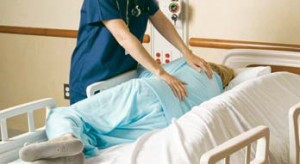 Proper shifting and repositioning is paramount in preventing nursing home patients from acquiring life threatening bedsores and pressure ulcers. According to the