An Orange County, New York jury awarded a Montague, New Jersey woman $24 million following an extreme incident of medical malpractice. Diane Manganiello was forty two years old when she was the victim of negligence which sent her into a coma for a period of time and now has left her with severe brain damage and very limited speech. Medical malpractice attorneys say that the damage award included $19.5 million for her future medical and rehabilitation needs and an additional $5 million for Andrew, her husband, for the relationship and enjoyment of life that he has now lost.
Mother of Five is the Victim of Medical Negligence
 Manganiello went into Bon Secours Community Hospital in Port Jervis, NY due to low sodium levels. Saline solution should have been infused into the woman slowly because this was a chronic condition. Sadly, this is not what happened. Medical malpractice attorneys say that saline solution was infused very rapidly, raising her sodium levels significantly in only fourteen hours. Following a trial that lasted nearly four weeks, the critical care physician, Dr. Moinuddin Ahmed was found to be sixty percent responsible, while Rose Aumick, the nurse, was found to be responsible for the remaining forty percent. Today, Manganiello lives in Milford, Pennsylvania at a supported living facility. Her family is only able to bring her home on weekends for visits but they hope in the future, thanks to the compensation from the verdict, that they will be able to bring her home permanently and she can receive a high level of care from home.
Medical Malpractice Attorneys in New Jersey and Philadelphia
If you or a family member has recently been the victim of medical negligence, it is possible that you would like to speak with our professionals. Please contact the Mininno Law Office for a free case evaluation, or call for a free consultation at (856) 833-0600 in New Jersey, or (215) 567-2380 in Philadelphia.
 A brain dysfunction caused Messina to collapse and landed him in and out of hospitals and rehabilitation centers beginning in late August of 2006. Several days after his admission into the hospital, he was diagnosed with bedsores. He began to develop the bedsores at SIUH and Golden Gate Rehabilitation and Health Care Center. Professionals say that Messina’s bed sores worsened until ulcers were developed on his mouth, buttocks, ankles, and genitals. Many of these bed sores had healed by the time he entered Golden Gate Rehabilitation Center. Various health problems sent Messina back and forth between the hospital and the rehab center over the next year. He can no longer walk due to a dislocated hip and he is unable to receive a replacement because of the infection which was caused by the bedsores. The New York Supreme Court jury assigned to this case found SIUH 75% responsible for the developments and complications of the bedsores. Bed sore attorneys say that this means that the hospital is liable for $4 million of the total awarded to Messina.
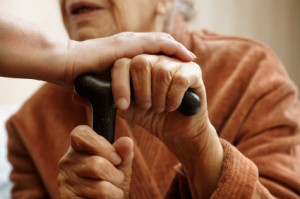 In February, April Courtney, 36, pleaded guilty to burglary and elder abuse for a September 3, 2008 attack on her then 94 year old grandmother Lydia. According to police investigations, over an eight-month period of time, Courtney had allegedly withdrawn $28,000 from Lydia’s bank accounts without her consent. The women had been fighting for a while since Lydia found out about the money. On the day of the attack, Courtney tricked her grandmother into thinking she was a friend when knocking on the door. When Lydia opened the door, Courtney grabbed her cane away and began to beat her with it. Lydia was hit about 20 times in the head and body and then fell to the ground and pretended to be unconscious in hopes that Courtney would stop hitting her. Courtney then went into the house and stole documents that might be used as evidence against her in the financial abuse case. She fled to Texas and was captured a week later by federal Marshals. She was set to go to trial on charges of burglary, elder abuse, attempted murder and inflicting great bodily injury on a person over 70 years old, but worked out a last minute plea deal where the attempted murder charge was dropped. Courtney was sentenced to four years in prison.
 Once your child starts to grow, your doctor may want to discuss appliances that can be put in his or her mouth, to make speech easier. The speech bulb may be suggested, which is a plastic ball that fits into the velopharyngeal space, which is then attached to a plastic plate fitted to the roof of the mouth and held in place by wire clasps. The size of the bulb will vary depending on the size of the velopharyngeal space. The bulbs function is to stop air and sound from escaping the nose during speech. It is removed at night before bed.
 A man fell at the health care center but did not receive proper treatment which led to his death. The report issued by the Department of Health Facility Complaints office stated that the man had a “large hematoma, approximately four centimeters by three centimeters, on his left forehead.” The man was not examined until thirty minutes after he sustained the injury and no vital signs or neurological tests were administered in the hours following the accident. Four hours after the fall, when the proper tests were finally conducted, the man’s vital signs were anything but stable and he was no longer responsive. He was then transferred to the hospital and died a mere two days after the initial accident. The death certificate stated that the death was caused by a massive intracranial hemorrhage. Nursing home neglect is far more prevalent than should be the case and it is essential that in the event of abuse or mistreatment, the proper authorities are notified as soon as possible.
 Velopharyngeal dysfunction occurs when the open space between the back wall of the throat and the soft palate cannot be properly closed during speech. Unfortunately, this results in an unwanted escape of air or sound through the nose during speech. Essentially, this dysfunction may result in what is called hyper-nasal speech. The sounds that create speech come from both the nose and the mouth. When we speak, the majority of those sounds should come from the mouth alone. Closing the velopharyngeal space allows people to build pressure in the mouth and make the appropriate speech sounds. When a VPD is present, air comes through the nose that should not, and speech becomes too nasal.
 With both parties meeting with an honest and neutral party, the judge, it is easier to get a true hold on how the parties can meet in the middle, at a fair amount of damages. We believe this process will probably result in somewhat smaller awards for plaintiffs but it will be paid far earlier than waiting for a verdict. Trials can drag on for years and years, this process should allow the parties to reach an agreement after only months. This will allow plaintiffs to get money much sooner, which in many cases is necessary as bills begin to stack up. Michelle M. Mello, a Harvard professor, said that “ordinarily when the parties come to a settlement conference, it’s late in the game.” This will no longer be the case with the success of judge-directed negotiations. The approach has been limited to New York City courts thus far but it is expected to spread rapidly due to its apparent success.
 The woman’s troubles began in early June, 2010. On June 8th, the resident fell two times causing significant injuries. First, she fell directly out of her wheelchair, causing her to knock her head against the ground. The woman sustained injuries just above her right eye. Later that same day, the resident fell once again out of her chair onto the floor of a lounge area at the care center. Employees should have been aware of the potential for falls because this woman suffered from advanced dementia and this should have been apparent to her caretakers. Less than one month later, on July 5th, an employee did not know how to use a Divided-leg Sling which was attached to a mechanical lift. This lack of understanding led to yet another fall. This led to the development of a significant sized bump on the back of her head. An investigator for the state was able to substantiate these claims of nursing home neglect when he visited the Lutheran Care Center in September of 2010. Nursing home neglect is a growing problem across the map and it is crucial that these problems be reported as soon as possible in an effort to sustain the health of patients and residents everywhere.
 Your child has a cleft lip and is about to start school and you are nervous that he or she may be the victim of a school bully. Our caring
  Since the plaintiff is the party bringing the lawsuit, the patient, and his or her medical malpractice attorneys, bear the burden of proving all of the necessary elements of the case by a preponderance of evidence (also known as the “more likely than not” standard). There are four key elements involved in a medical malpractice lawsuit.