DePuy Orthopaedics has recently recalled it’s defective ASR Hip Implant System, however, not every DePuy hip implant has failed. If you are a recipient of the DePuy hip replacement, you should look for any of the following signs and symptoms:
- Hip Pain (with or without activity) – All patients who have had hip replacement surgery will experience some pain at first. However, the symptoms are supposed to improve and, eventually, go away. If your symptoms have gone away and have now returned, or never did go away at all, it may be a sign of a defective hip implant.
- Hip Swelling – Swelling is normal in the immediate post operative period following a hip replacement. However, if you have a new onset of hip swelling following a DePuy hip implant, this may be another sign that the metal components are wearing out and causing the swelling.
- Problems Walking – Finally, some patients who have been discovered to have received defective hip replacements complain of problems walking. This problem is usually caused by the body’s reactions to the metallic particles which have worn away from the DePuy hip implant. This may be one of the most serious signs or symptoms, because this could mean that the metal particles have caused damage to the muscles, tissue, bones, and nerves surrounding the hip joint.
click on the image to enlarge:

Depuy Recall Attorneys at the Mininno Law Office
If you are experiencing any of the above signs or symptoms, please contact the Mininno Law Office for more information and a free case evaluation.
In fact, even if you have not yet experienced the symptoms and want more information about what you should do if you have a DePuy hip replacement, call for a free consultation at (856) 833-0600 in New Jersey and (215) 567-2380 in Philadelphia.
 A recent research study by the University of Washington revealed that sixteen percent of appendectomies are performed on hospital patients who don’t need them. Medical tests can determine if the patient has a stomach virus or inflamed lymph nodes that mimic the symptoms of appendicitis.
 Nissan has pro-actively recalled more than two million cars and trucks worldwide for what they have described as an “ignition problem.” The Japanese automobile manufacturer explains that an ignition part, called a relay, could potentially malfunction which would cause a vehicle to stall. The issue can be fixed in less than an hour by simply reprogramming the vehicle.
 An article published by the New York Times speaks of the $750 million settlement the British drug company GlaxoSmithKline has agreed to pay to end a number of civil and criminal complaints regarding knowingly defective medicines they put on store shelves for years. Such
  The money will be distributed under the guidelines of the Affordable Care Act, and the National Background Check Program will begin in Alaska, Connecticut, Delaware, Florida, Missouri, and Rhode Island. Eleven additional states may be added to the program as early as November of this year.
 In 2003, Maria (37) walked into the emergency room at Downey Regional Medical Center in California with complaints of severe headaches and vomiting. Maria was sent home with Tylenol. A few days later, after her symptoms worsened, Maria returned the ER, where doctors determined that it would be necessary to check her for a shunt related brain infection. She was transferred to Lakewood Regional Hospital, but her treating physician did not include any of Sanchez’s within her report, and the consulting neurologist at Lakewood failed to look at any of her records. He also didn’t test for the infection she was sent to Lakewood to be tested for. Sanchez’s condition worsed and she was finally admitted to the Lakewood ER after she fell out of her wheelchair.
 In March, an Orlando jury awarded a $38.75 million dollar verdict after medical malpractice in the delivery room caused an irreversible birth defect:
 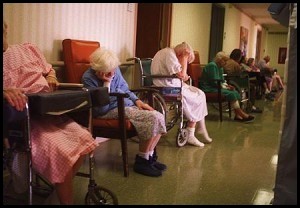 The Centers for Disease Control estimates that 1,800 nursing home residents die each year from fall-related injuries. A nursing home with 100 beds will report between 100 and 200 falls yearly. And that does not include the many falls that go unreported. Falls can be deadly to an elderly person, and between 2 and 6% of falls result in fracture.
 In 2007, the plaintiff was working as a plumber on a construction site under a general contractor and subcontractor. Day one on the job, he attempted to ascend a flight of stairs. As he climbed, the stairs collapsed beneath him. He suffered a burst fracture and had to undergo a two-level spinal fusion surgery to correct his injuries.
 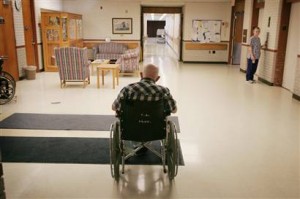 We’ve talked before about how nursing homes are businesses; big businesses with corporate agendas and money hungry CEO’s. Today, these corporations are wide-eyed at the thought of an influx of baby boomers entering their facilities. This prospect of large profits has caused a major drop in the level of care provided to our elderly loved ones.