A settlement was reached between an Iowa woman and the University of Iowa Hospitals and Clinics. Medical malpractice attorneys settled Nancy Kammerer‘s case for $1.5 million, a figure reported by the Associated Press. The woman was in need of a kidney transplant which was to help save her life and allow her to resume daily activities as she had hoped. Fortunately, her husband was a match and was able to donate his kidney to help out his wife in need. However, the good fortune ended there. Following an enormous medical error, the woman was left severely diabetic.
Life Saving Procedure Further Endangers Woman
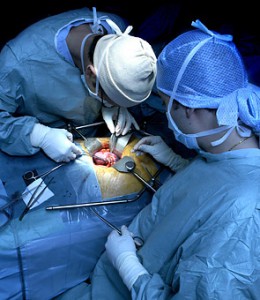 Nancy Kammerer, 56, of Urbandale, Iowa, alleged that her physicians mistakenly cut part of her pancreas while undertaking the transplant procedure in 2008. Her lawyers said that her pancreas needed to be removed after this mistake, leading Kammerer into a future of medical uncertainty. Kammerer was a special projects manager at Wells Fargo prior to her surgery, a position that she soon had to give up after the alleged medical negligence. Her medical malpractice attorneys said that Kammerer became an insulin dependent diabetic, which added further pain and medical troubles into her life. In her complaint, attorneys alleged that the error was due in part to an inaccurate medical record that was in her file. It is certainly an unfortunate situation, but they say that it is not uncommon. It is important for patients who have been victimized by medical negligence to seek legal advice in order to receive compensation for their potentially sky rocketing bills. Victims often have increased hospital bills, future medical expenses, and extreme pain and suffering, which occurs far too often.
Medical Malpractice Attorneys in New Jersey and Philadelphia
If you or a family member have recently been the victim of medical negligence, it is possible that you would like to speak with our professionals. Please contact the Mininno Law Office for a free case evaluation, or call for a free consultation at 856-833-0600 in New Jersey, or 215-567-2380 in Philadelphia.
 Manganiello went into Bon Secours Community Hospital in Port Jervis, NY due to low sodium levels. Saline solution should have been infused into the woman slowly because this was a chronic condition. Sadly, this is not what happened. Medical malpractice attorneys say that saline solution was infused very rapidly, raising her sodium levels significantly in only fourteen hours. Following a trial that lasted nearly four weeks, the critical care physician, Dr. Moinuddin Ahmed was found to be sixty percent responsible, while Rose Aumick, the nurse, was found to be responsible for the remaining forty percent. Today, Manganiello lives in Milford, Pennsylvania at a supported living facility. Her family is only able to bring her home on weekends for visits but they hope in the future, thanks to the compensation from the verdict, that they will be able to bring her home permanently and she can receive a high level of care from home.
 A man fell at the health care center but did not receive proper treatment which led to his death. The report issued by the Department of Health Facility Complaints office stated that the man had a “large hematoma, approximately four centimeters by three centimeters, on his left forehead.” The man was not examined until thirty minutes after he sustained the injury and no vital signs or neurological tests were administered in the hours following the accident. Four hours after the fall, when the proper tests were finally conducted, the man’s vital signs were anything but stable and he was no longer responsive. He was then transferred to the hospital and died a mere two days after the initial accident. The death certificate stated that the death was caused by a massive intracranial hemorrhage. Nursing home neglect is far more prevalent than should be the case and it is essential that in the event of abuse or mistreatment, the proper authorities are notified as soon as possible.
 With both parties meeting with an honest and neutral party, the judge, it is easier to get a true hold on how the parties can meet in the middle, at a fair amount of damages. We believe this process will probably result in somewhat smaller awards for plaintiffs but it will be paid far earlier than waiting for a verdict. Trials can drag on for years and years, this process should allow the parties to reach an agreement after only months. This will allow plaintiffs to get money much sooner, which in many cases is necessary as bills begin to stack up. Michelle M. Mello, a Harvard professor, said that “ordinarily when the parties come to a settlement conference, it’s late in the game.” This will no longer be the case with the success of judge-directed negotiations. The approach has been limited to New York City courts thus far but it is expected to spread rapidly due to its apparent success.
 The woman’s troubles began in early June, 2010. On June 8th, the resident fell two times causing significant injuries. First, she fell directly out of her wheelchair, causing her to knock her head against the ground. The woman sustained injuries just above her right eye. Later that same day, the resident fell once again out of her chair onto the floor of a lounge area at the care center. Employees should have been aware of the potential for falls because this woman suffered from advanced dementia and this should have been apparent to her caretakers. Less than one month later, on July 5th, an employee did not know how to use a Divided-leg Sling which was attached to a mechanical lift. This lack of understanding led to yet another fall. This led to the development of a significant sized bump on the back of her head. An investigator for the state was able to substantiate these claims of nursing home neglect when he visited the Lutheran Care Center in September of 2010. Nursing home neglect is a growing problem across the map and it is crucial that these problems be reported as soon as possible in an effort to sustain the health of patients and residents everywhere.
 Since the plaintiff is the party bringing the lawsuit, the patient, and his or her medical malpractice attorneys, bear the burden of proving all of the necessary elements of the case by a preponderance of evidence (also known as the “more likely than not” standard). There are four key elements involved in a medical malpractice lawsuit.
 The patient went to the Mazzocco Ambulatory Surgical Center to have the lens on one of his eyes replaced with an artificial counterpart. The operation was categorized as standard and was only scheduled to last about two hours. The anesthesiologist assigned to the man reportedly had a history of walking out of the operating room while patients were under the effects of the potent drug. In the case that lead to the lawsuit, the patient was led into a deeper level of sedation than necessary.

