Medical malpractice attorneys represent patients each year that suffer the often lasting effects of surgical fires. Sometimes, they represent the family members of patients who did not live through the harrowing tragedy. It is important to discuss with your surgeon the risks and dangers associated with surgical room fires.
Operating Room Fires Rare but Relevant
 Dr. Nancy Perrier speaks of her first encounter with an operating room blaze;
“The flames were at least 6 to 8 feet high and the correct actions were unknown to everyone in the operating room. The patient survived the operation, but died about 30 days later from complications of a significant pulmonary injury.”
Doctors and the FDA alike know that these events are nearly 100% preventable. That is why they are pushing for increased oversight on the education of surgical fires for operating room personnel.
Just last month, the FDA hosted a special workshop to looks for ways to stop fires from happening, as well as to offer pertinent medical professionals the tools and knowledge to deal with those that occur.
Experts have estimated that about 650 operating room fires are sparked nationwide every year. As previously stated, many of the victims of those fires will walk away scarred or marginally scathed. Others, however, will lose their lives.
Dr. David Cowles, an anesthesiologist who previously spent 14 years as a firefighter and paramedic, knows well the need for FDA intervention when it comes to establishing a medical standard concerning surgical room fires:
“As a firefighter you’re concerned about what’s going to be the safest way to do a dangerous job and that’s not unlike what it is in the operating room, where every day we perform procedures that could be dangerous and we need to explore the safest way to do that.”
Medical Malpractice Lawyers in New Jersey and Philadelphia
If you or a family member have been victimized by medical errors due to negligent or inadequate medical providers, please contact the Mininno Law Office to speak with a medical malpractice attorney. You may also call for a free case evaluation and consultation at (856) 833-0600 in New Jersey and (215) 567-2380 in Philadelphia.
Let our professionals earn you your just and due compensation.
 Some lawyers who have represented defendants in these sorts of cases have come forth with surprising, if not shocking, legal arguments to avoid liability. Some attorneys in this situation have argued that there can not possibly be negligence because that tort requires a duty and a breach of duty. The argument follows that a defendant could not have possibly had a duty of care towards a being that is not yet born. This approach is very rarely accepted because it sets forth bad public policy and it tends to disregard the values we tend to hold as a society. Negligence that harms an unborn baby is just as undesirable as


 One important case regarding medical malpractice was Hickson v. Martinez from a Texas appellate court. That court held that doctors must act as prudent and reasonable doctors in the same or similar communities would. This ensures that no matter what healthcare provider a patient decides to go to for treatment, that treatment will be relatively similar. Another important case comes from Indiana and is cited as Vergara v. Doan. That court held that a doctor must exercise the degree of skill, care, and proficiency that would be exercised by reasonably careful, skillful, and prudent doctors who are placed under similar circumstances. That court said that the locality, different advances in the profession as a whole, the availability of facilities, and whether the healthcare provider was a specialist or a general practitioner are all to be considered. The final case that illustrates this aspect of the law comes from Mississippi. In Hall v. Hilbun, the court viewed the locality expansively, taking into consideration doctors across the United States who have similar facilities, services, equipment and options available to them. Medical malpractice attorneys have found that regardless of the technical criteria of a jurisdiction, doctors should hold themselves to the acceptable standards of other doctors in similar situations.
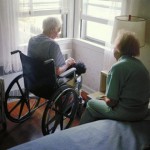 We write a lot about shocking and extreme cases of elder abuse and neglect. But we want to remind you that, as
  In the first approved settlement, the State Appeals Board approved a settlement in the case of Melinda Schultz for a figure around $300,000. In that case, the plaintiff alleged that her anesthesiologist negligently administered pain medication prior to a knee operation. In the second settlement, the family of William Bribriesco was awarded $91,000 to settle the case. Mr. Bribriesco passed away following an extended term at the hospital. The plaintiff’s lawyers in that case alleged that the man died because he developed an infection which was attributable to negligent treatment during his stay at the University of Iowa Hospital. Following a complicated procedure to treat a heart aneurysm, the medical malpractice attorneys believe that negligent treatment led to the man’s demise.
 In some cases, a plaintiff will be awarded a new trial if the damage amount found by the jury appears to be inadequate. In that case, a court will require the case to be retried unless the defendant makes certain concessions. A defendant may agree to pay a larger amount than that which was awarded by the jury in order to properly compensate the plaintiff and avoid a lengthy re-trial. Courts, both on the trial and appellate level, lack the authority