 Defective products attorneys work to serve two groups of people: their immediate clients who have been injured and are in need of compensation, and the public at large, who are put into harm’s way with a defective product.
Recently, in Alabama, a verdict was found against KIA Motors for the death of 16 year old Tiffany Stabler, who was tragically killed after being ejected from her KIA as a result of a collision. Tiffany’s father purchased the car as a gift, and took it to the dealership to make sure everything was in working order. If the recall had been issued in time, Tiffany would still be alive today.
In 2002, KIA recalled nearly 190,000 vehicles from 1995-1998 for defective seat belts, which made a latch noise, but never closed. However, this recall was a month too late for Tiffany, who was killed before the recall was issued. The family’s defective products attorneys were able to secure a sizable judgment for the family, which they most certainly deserve.
How Defective Products Attorneys Help the Public
The Stabler family’s defective products attorneys assisted the Stabler family in receiving compensation, for sure. But they have also helped the public at large, by winning a judgment that will surely make KIA Motors re-think it’s business practices in order to make cars safer for consumers. When a product is defective, defective product attorneys are an important part of the system to insure that market forces mandate a change in the manufacturing of that product. Changing dangerous products is beneficial to everyone as a whole.
Defective Products Attorneys of New Jersey and Philadelphia
If you or your family members have been injured by a defective product, it is important to act quickly to protect your legal rights. Our experienced professionals are available to assist you in getting the compensation you and your family deserve. Contact the Mininno Law Office for a free case evaluation or call for a free consultation at (856) 833-0600 in New Jersey, or (215) 567-2380 in Philadelphia.
 85-year old Heartland Health Care Center – Kalamazoo resident, Dollie McGrew died this month when the facility van that was transporting her to a dental appointment at the University of Michigan hit the curb. McGrew was pronounced dead at the scene while the driver of the van was not injured. The details of the incident have not been released, but the driver of the van did have a valid driver’s license and the facility did report the death to the state.
 On June 11, 2011 Juan David Hernandez, 28, who is a Colombian citizen and a resident of Florida, was arrested in Vancouver for obstruction of justice after he gave a false name when he was pulled over for an illegal turn by a police officer. According to Vancouver Police Det. Rick Stewart, “When they looked inside the vehicle’s front seat, they saw bags and bags of mail.” The bags were full of letters from all over the world containing checks for $30. After an investigation, they discovered that Hernandez was guilty of
  Manganiello went into Bon Secours Community Hospital in Port Jervis, NY due to low sodium levels. Saline solution should have been infused into the woman slowly because this was a chronic condition. Sadly, this is not what happened. Medical malpractice attorneys say that saline solution was infused very rapidly, raising her sodium levels significantly in only fourteen hours. Following a trial that lasted nearly four weeks, the critical care physician, Dr. Moinuddin Ahmed was found to be sixty percent responsible, while Rose Aumick, the nurse, was found to be responsible for the remaining forty percent. Today, Manganiello lives in Milford, Pennsylvania at a supported living facility. Her family is only able to bring her home on weekends for visits but they hope in the future, thanks to the compensation from the verdict, that they will be able to bring her home permanently and she can receive a high level of care from home.
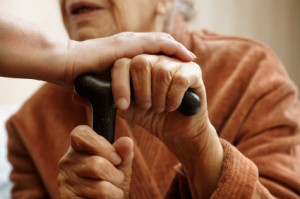 In February, April Courtney, 36, pleaded guilty to burglary and elder abuse for a September 3, 2008 attack on her then 94 year old grandmother Lydia. According to police investigations, over an eight-month period of time, Courtney had allegedly withdrawn $28,000 from Lydia’s bank accounts without her consent. The women had been fighting for a while since Lydia found out about the money. On the day of the attack, Courtney tricked her grandmother into thinking she was a friend when knocking on the door. When Lydia opened the door, Courtney grabbed her cane away and began to beat her with it. Lydia was hit about 20 times in the head and body and then fell to the ground and pretended to be unconscious in hopes that Courtney would stop hitting her. Courtney then went into the house and stole documents that might be used as evidence against her in the financial abuse case. She fled to Texas and was captured a week later by federal Marshals. She was set to go to trial on charges of burglary, elder abuse, attempted murder and inflicting great bodily injury on a person over 70 years old, but worked out a last minute plea deal where the attempted murder charge was dropped. Courtney was sentenced to four years in prison.
 With both parties meeting with an honest and neutral party, the judge, it is easier to get a true hold on how the parties can meet in the middle, at a fair amount of damages. We believe this process will probably result in somewhat smaller awards for plaintiffs but it will be paid far earlier than waiting for a verdict. Trials can drag on for years and years, this process should allow the parties to reach an agreement after only months. This will allow plaintiffs to get money much sooner, which in many cases is necessary as bills begin to stack up. Michelle M. Mello, a Harvard professor, said that “ordinarily when the parties come to a settlement conference, it’s late in the game.” This will no longer be the case with the success of judge-directed negotiations. The approach has been limited to New York City courts thus far but it is expected to spread rapidly due to its apparent success.
 Since the plaintiff is the party bringing the lawsuit, the patient, and his or her medical malpractice attorneys, bear the burden of proving all of the necessary elements of the case by a preponderance of evidence (also known as the “more likely than not” standard). There are four key elements involved in a medical malpractice lawsuit.
 In one of the suits, Bonita Tomblin is alleging that her late mother, Anoway Rose Smith, died as a result of the nursing home’s “systemic abuse and neglect.” Smith was a patient at the nursing home four separate times between August 25, 2009 and February 2010, and she died on February 23, 2010. According to the lawsuit, Tomblin says her mother suffered “skin breakdown, weight loss and falls” as a result of the neglect from the home. The lawsuit asks for damages for pain and suffering, mental anguish, inconvenience, physical impairment, loss of capacity for the enjoyment of life, aggravation of existing diseases and physical defects, medical expenses and for her death. It also requests punitive damages.
 The patient went to the Mazzocco Ambulatory Surgical Center to have the lens on one of his eyes replaced with an artificial counterpart. The operation was categorized as standard and was only scheduled to last about two hours. The anesthesiologist assigned to the man reportedly had a history of walking out of the operating room while patients were under the effects of the potent drug. In the case that lead to the lawsuit, the patient was led into a deeper level of sedation than necessary.
 Right now, Kentucky state law only requires nursing homes and long-term care facilities to conduct name-based background checks for prospective direct care employees. With the grant and the new digital fingerprint scanning equipment, more in-depth criminal background checks will be available. Kentucky state law also does not order that the employees submit fingerprint checks, but the facilities will be expected to voluntarily participate in the grant program and officials are expecting high involvement. According to the Cabinet for Health and Family Services spokeswoman Jill Midkiff, the cabinet intends to pursue legislation that would require the fingerprint checks for caregivers employed in long-term care facilities.