 AThe use of chemical restraints is, unfortunately, nothing new. Nursing home abuse lawyers have long known that medication is often used to sedate and restrain residents. ABC News online recently published an article on the detrimental effects of a certain prescription often given to Dementia patients in nursing homes. Most of the time, these prescriptions are dispersed not only to sedate patients so they become more “manageable,” but also to help the nursing home make money from the Medicaid reimbursements they receive for ordering the medication.
Medication Causes Increased Death Risk in Dementia Patients
study of over 75,000 nursing home residents – 65 and older, who suffer from dementia – has found that those that take the anti-psychotic drug Haldol double their risk of death compared to those taking Risperdal. It seems that the risk was highest during the first 40 days of treatment. Krsita Huybrechts, epidemiologist at Brigham and Women’s Hospital in Boston, commented on the recent findings:
“The evidence provided in our study reinforces the important risks associated with the use of these drugs and underscores the need to try alternative means of dealing with behavioral problems in older patients with dementia. [The use of Haldol] cannot be justified because of the excess of harm. ”
Conversely, patients taking Seroquel appeared, according to the study, to have a decreased risk of death compared to those taking Risperdal. However, the use of any of the medications seems unneccessary, seeing as their effect on dementia symptoms is quite limited; so much so that the FDA never even approved many of these drugs for use in the treatment of dementia. Nursing homes are being reimbursed by Medicaid for the off-label distribution on anti-psychotics, or chemical restraints.
Dr. Jenny McCleery, consultant psychiatrist with the Oxford Heath NHS Foundation Trust in the U.K., believes that doctors are prescribing these antipsychotic drugs due to a lack of resources for non-drug interventions.
“Clearly, doctors find compelling reasons to prescribe antipsychotics to patients with dementia, reasons that are unlikely to be found in the evidence base alone.”
Nursing Home Abuse Lawyers in New Jersey and Philadelphia
Nursing home residents suffering from dementia are indeed a difficult population to care for. That does not, however, condone the use of drugs to sedate patients so they become easier to care for. Nursing homes should provide competent, compassionate, and attentive care to your loved ones living in long term care facilities.
If you believe that the home in charge of your loved one’s care is acting negligently or abusively, contact the nursing home abuse lawyers of Messa & Associates, P.C. Call 1-800-MessaLaw, or submit a free online inquiry. You may also click on the CHAT LIVE icon to the right to speak with a representative immediately.
 Sustained pressure occurs when the skin and tissue are compacted between the bone and an outer surface. Surfaces such as beds and wheel chairs are the most common. The pressure may over power the blood, flowing through the capillaries, preventing oxygen and nutrients from reaching the skin tissues. Bedsore attorneys believe that regions of the body that are not protected by fat or muscle tend to be at the greatest risk of bedsores caused by sustained pressure.
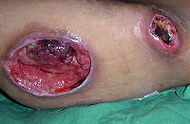 Bed sores are categorized into 4 stages. The
  The Holiday Care Center located in Toms River, New Jersey. This nursing home was inspected routinely on 9 occasions and cited for 40 deficiencies during the period from December 2008 through November 2010. It was also necessary for the NJ Division of Health Facilities and Evaluation and Licensing to conduct 10 complaint inspections with 5 more deficiencies cited during this time period. Some of these citations were for failing to keep the rate of medication errors (wrong drug, wrong dose, wrong time) to less than 5%, for failing to have a program to keep infection from spreading, and failing to make sure that a residents nutritional needs are being met. These types and amount of deficiencies are those that lead to nursing home abuse. Patients’ families must remain vigilant when their loved one is in a for profit nursing home such as Holiday Care Center, to make sure that they are being cared for in an acceptable and effective manner.
 Recently, the prestigious Washington Post reported on a fairly widespread yet rarely discussed practice of medical device sales representatives to lurk in operating rooms, without patient knowledge or approval, and guide surgeons in the surgical procedure. According to the Washington Post, this practice of sales rep “assistance” is common among medical device companies including Johnson & Johnson, Stryker, Zimmer, and DePuy.
 As a family member of a nursing home resident, it is important to be aware of the signs and symptoms of nursing home neglect and abuse. Keep a close watch not only on your loved one, but on the facility in it’s entirety, for the following signs of neglect:
 As medical malpractice lawyers, we find that those who accuse medical malpractice claims of being frivolous do not understand the extent of the damage done to people’s lives when negligent doctors make irreversible mistakes. Tort reform would only serve to harm those who are already victims of their health system, and reduce liability for those companies that, by merit of their missions, should be working for their consumers, not against them.
  One way to prevent bed sores from forming is to have a staff that is properly educated. Educational programs about bed sore and pressure ulcer prevention should be made mandatory for all levels of health care providers. They should also be made available for patient families so that they can make sure nursing home staff members are giving their loved ones the care they need and deserve. Patients who have the appropriate mental capacity should also be given instructions so that they can be advocates for their own proper care.
  These surfaces typically have layers that help provide optimal immersion and comfort for the nursing home patient. These surfaces are designed to have independent zones to provide the correct pressure for each weight range. These surfaces are designed, in fact, to help aid in both the prevention and the treatment of bed sores and pressure ulcers. Redistribution of surface pressue is very important as the pressure causes the small blood vessels in the skin to collapse, which deprives the skin of oxygen and nutrients, causing them to die. Nursing homes should avoid using donut-type devices and most sheepskin products for pressure redistribution. Staff members should be aware of the need for proper surfaces. Not using the proper surface for patients is tantamount to nursing home abuse. The use of the proper pressure-redistributing surfaces along with proper repositioning may be two of the most important bed sore prevention tips that all families should be aware of and vigilant to for the well being of their loved ones.
  As a New Jersey and Philadelphia