An unidentified 83-year-old woman was seriously injured in May 2011 outside of the Ambrosio Guillen Texas State Veterans Home in El Paso, Texas in a case of nursing home neglect. The woman was smoking in her wheelchair right outside the front entrance of the facility when the cigarette fell out of her hand and onto her clothing, which burst into flames. Fortunately, a staff member saw the flames and ran outside, took his shirt off and put out the fire. The woman suffered first and second degree burns on her hands and face.
Residents Not Supervised While Smoking
 According to the fire department, facility workers wheeled the woman outside daily so she could smoke by the entrance of the building. The residents were allowed to smoke in that area of the nursing home. But it was not required by the home that the residents be supervised while they were smoking. According to Jim Suydam, spokesman for the Texas Veterans Land Board, an entity that runs the El Paso facility, since the woman did not suffer from Alzheimer’s disease, she did not need to be under constant supervision.
This is not an adequate reason for this woman to have been left alone while smoking. Patients with Alzheimer’s and dementia do need to be monitored much more than other patients, but there are numerous other conditions that could have made it unsafe for this woman to be smoking alone. Besides the obvious health risks of smoking, especially once you get older, it is unsafe and negligent for the facility to allow their residents to be alone while holding something that could cause them to catch on fire. Even if the resident did not require constant supervision, she should have been monitored while holding a lit cigarette.
Nursing Home Neglect Lawyers in New Jersey and Philadelphia
If your loved one is currently a resident of a nursing home or care facility and you are worried that they are not being monitored enough or the care they are receiving is negligent, abusive, or inadequate, contact the Mininno Law Office for a free case evaluation. You may also call for a free consultation at (856) 833-0600 in New Jersey, or (215) 567-2380 in Philadelphia.
 Soland was given a criminal neglect charge to for each victimized patient, along with a possession charge for the drug. Soland pleaded guilty in May to one felony theft and criminal neglect charge, and the rest of the charges from the incident were dropped. She was sentenced to 120 days in jail and was credited for 67 days served. She must also complete five years of probation.
 A 57-year-old woman was found unresponsive this week outside of the Riverview Nursing Home in Bossier City, Louisiana where she lived. The autopsy has not yet been performed, but Bossier Coroner Dr. John Chandler said there were indications that the death was heat-related. It was 100 degrees with a heat index of 106 degrees in Bossier City on the day the woman was found. She had been missing for several hours before a staff member of the nursing home found her a little after 6 p.m. She was taken to Willis Knighton Pierremont hospital in Shreveport where she was pronounced dead.
 85-year old Heartland Health Care Center – Kalamazoo resident, Dollie McGrew died this month when the facility van that was transporting her to a dental appointment at the University of Michigan hit the curb. McGrew was pronounced dead at the scene while the driver of the van was not injured. The details of the incident have not been released, but the driver of the van did have a valid driver’s license and the facility did report the death to the state.
 On June 11, 2011 Juan David Hernandez, 28, who is a Colombian citizen and a resident of Florida, was arrested in Vancouver for obstruction of justice after he gave a false name when he was pulled over for an illegal turn by a police officer. According to Vancouver Police Det. Rick Stewart, “When they looked inside the vehicle’s front seat, they saw bags and bags of mail.” The bags were full of letters from all over the world containing checks for $30. After an investigation, they discovered that Hernandez was guilty of
 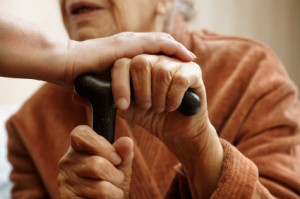 In February, April Courtney, 36, pleaded guilty to burglary and elder abuse for a September 3, 2008 attack on her then 94 year old grandmother Lydia. According to police investigations, over an eight-month period of time, Courtney had allegedly withdrawn $28,000 from Lydia’s bank accounts without her consent. The women had been fighting for a while since Lydia found out about the money. On the day of the attack, Courtney tricked her grandmother into thinking she was a friend when knocking on the door. When Lydia opened the door, Courtney grabbed her cane away and began to beat her with it. Lydia was hit about 20 times in the head and body and then fell to the ground and pretended to be unconscious in hopes that Courtney would stop hitting her. Courtney then went into the house and stole documents that might be used as evidence against her in the financial abuse case. She fled to Texas and was captured a week later by federal Marshals. She was set to go to trial on charges of burglary, elder abuse, attempted murder and inflicting great bodily injury on a person over 70 years old, but worked out a last minute plea deal where the attempted murder charge was dropped. Courtney was sentenced to four years in prison.
 A man fell at the health care center but did not receive proper treatment which led to his death. The report issued by the Department of Health Facility Complaints office stated that the man had a “large hematoma, approximately four centimeters by three centimeters, on his left forehead.” The man was not examined until thirty minutes after he sustained the injury and no vital signs or neurological tests were administered in the hours following the accident. Four hours after the fall, when the proper tests were finally conducted, the man’s vital signs were anything but stable and he was no longer responsive. He was then transferred to the hospital and died a mere two days after the initial accident. The death certificate stated that the death was caused by a massive intracranial hemorrhage. Nursing home neglect is far more prevalent than should be the case and it is essential that in the event of abuse or mistreatment, the proper authorities are notified as soon as possible.
 The woman’s troubles began in early June, 2010. On June 8th, the resident fell two times causing significant injuries. First, she fell directly out of her wheelchair, causing her to knock her head against the ground. The woman sustained injuries just above her right eye. Later that same day, the resident fell once again out of her chair onto the floor of a lounge area at the care center. Employees should have been aware of the potential for falls because this woman suffered from advanced dementia and this should have been apparent to her caretakers. Less than one month later, on July 5th, an employee did not know how to use a Divided-leg Sling which was attached to a mechanical lift. This lack of understanding led to yet another fall. This led to the development of a significant sized bump on the back of her head. An investigator for the state was able to substantiate these claims of nursing home neglect when he visited the Lutheran Care Center in September of 2010. Nursing home neglect is a growing problem across the map and it is crucial that these problems be reported as soon as possible in an effort to sustain the health of patients and residents everywhere.
 In one of the suits, Bonita Tomblin is alleging that her late mother, Anoway Rose Smith, died as a result of the nursing home’s “systemic abuse and neglect.” Smith was a patient at the nursing home four separate times between August 25, 2009 and February 2010, and she died on February 23, 2010. According to the lawsuit, Tomblin says her mother suffered “skin breakdown, weight loss and falls” as a result of the neglect from the home. The lawsuit asks for damages for pain and suffering, mental anguish, inconvenience, physical impairment, loss of capacity for the enjoyment of life, aggravation of existing diseases and physical defects, medical expenses and for her death. It also requests punitive damages.
 Right now, Kentucky state law only requires nursing homes and long-term care facilities to conduct name-based background checks for prospective direct care employees. With the grant and the new digital fingerprint scanning equipment, more in-depth criminal background checks will be available. Kentucky state law also does not order that the employees submit fingerprint checks, but the facilities will be expected to voluntarily participate in the grant program and officials are expecting high involvement. According to the Cabinet for Health and Family Services spokeswoman Jill Midkiff, the cabinet intends to pursue legislation that would require the fingerprint checks for caregivers employed in long-term care facilities.