 In different nursing home abuse complaints, two elderly female residents of a nursing home allege that a nursing home employee hit one woman to the point where her nose bled, and applied toothpaste to the other woman’s vaginal region, threatening to choke her if she tried to prevent the abuse. The victims, ages 79 and 93, state that their Carolina House nursing home employed Sonia S. King despite the fact that she had been known to abuse residents, and had been suspended for verbal abuse of another senior resident. Sonia King also allegedly forced a resident to swallow medication after the resident spit it out, verbally abused residents, and even threatened to force one resident to smell her own feces if she would not comply with directions.
These tragic incidents were witnessed by another nursing home employee, who reported the incidents to the nursing director. Following an investigation, Ms. King was arrested by local authorities and charged with elder abuse.
What Can I Do To Protect My Loved One From Nursing Home Abuse?
If you have a loved one in a nursing home, be very careful to check for signs of abuse and neglect. Unfortunately, incidents such as the ones described above are becoming all too common. The best thing you can do is to visit your loved one frequently and let the staff know you care. Hopefully, this will allow you to detect any signs of abuse or neglect early. Listen to what your loved one has to say. Talk to the nurses and staff. Bruising, bed sores, unexplained hospitalization, and/or incidents of septic shock should raise red flags. If you suspect abuse, do not be afraid to speak up. Contact the proper authorities and an attorney immediately.
Nursing Home Abuse Lawyers in New Jersey and Philadelphia
The Nursing Home Abuse Attorneys at the Mininno Law Office are equipped to fight back against nursing home abuse. They will stand up for you and your loved ones! Contact the Mininno Law Office for a free case evaluation or call at (856) 833-0600 in New Jersey or (215) 567-2380 in Philadelphia for a free and private consultation.
 This trained professional is a source of assistance and alternatives to every day needs. For instance, if your child has a cleft lip he or she will likely have difficulty producing plosives, which include “p”, “b”, “k”, “g”, “t”, and “d”. These plosives are formed by the sealing of the lips and releasing of pressure. Without a full seal of the lips, these words will be problematic in every day speech. A speech language pathologist will work one on one with your child and your family to help develop a stronger labial seal and alternatives to producing these sounds, in order to help your child efficiently communicate. Speech therapy will help your child work on articulation inaccuracies, plosive sounds, and audible speech.
 A newborn baby with a cleft lip will have trouble sealing the lips and nasal cavity, preventing efficient sucking. The orbicularis oris, the muscle of the lips, has been affected due to the cleft lip , which prevents the muscles from properly functioning to provide a strong labial seal. If the cleft lip is specific to one area of the lip (i.e. the right or left side) it may help to breastfeed your baby at an angle towards the side of the lip without the malformation. By repositioning yourself, you can help your baby create a stronger labial seal, allowing him or her to suck more efficiently.
 Liu, now 29, was struck in 2007 by 67 year old Douglas Wayne Seybert as he was turning an “S” curve on the Freeport Boulevard in Sacramento. Liu’s traumatic injury case focused on the lack of visibility along the boulevard where she was struck. Liu’s attorney argued that the city was negligent in providing substantial warning to motorists about the crosswalk they are approaching, the same crosswalk where Liu was hit.
  Shoulder dystocia occurs when a baby’s shoulder gets stuck behind a mother’s pubic bone. In order to avoid injury, certain changes must be made during delivery. Birth injuries arising from the improper delivery of a baby with shoulder dystocia can be permanent. In the case of the Virginia boy, it was shown that the nerve damage caused him permanent disablement of his right arm. He may need assistance for simple tasks for the rest of life, and may not be able to do many of the typical activities of childhood due to the birth injury he received.
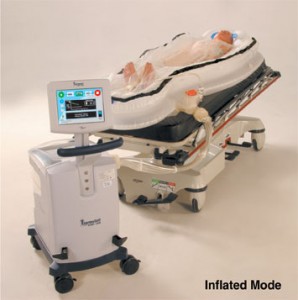 The treatment is called therapeutic hypothermia, and it is relatively new in the medical field. Therapeutic hypothermia involves lowering an unconscious patient’s temperature to between 32 and 34 degrees celsius using a “cooling blanket,” a special cap, or a mattress filled with either air or liquid. The aim of the treatment is to cool the patient’s brain and slow the rate of cell damage, therefore preventing irreversible brain injury or damage.
  Suckles is a part of the pediatric swallowing process. It is different from swallowing in that it occurs from 8 months of gestation up until 6 months after birth. Suckling also differs from sucking in the tongue and jaw movement. The jaw is stable and the tongue moves back and forth. This works in young babies because of the developmental stage of their laryngeal structures. With a cleft lip, your baby may have difficulty with tongue movement and minor problems with suckling. If suckling is a problem for your baby it is wise to develop a pattern of squeezing the bottle to help the baby adapt for a pattern of suckling. This pattern will help your baby adjust to the proper movements to help obtain the milk.
 Young babies with a cleft lip are often able to receive nutrition through bottle feeding. It is important to keep an eye on your individual child’s particular eating capabilities. For instance, newborn babies with a cleft lip may need more time to eat because of sucking difficulty due to the lack of closure between the lips and nasal cavity. Babies also may need to be bottle fed rather than breastfed because of these closure issues. Liquids, like milk from a bottle, may leak through the nasal cavity. The specific method chosen for your baby depends on your own child’s cleft lip condition. It is important to contact your physician regarding precise techniques that are most beneficial to your baby.
 First of, if you have any concerns, consult with an experienced attorney as well as appropriate state agencies. Telltale signs of nursing home abuse are the presence of bed sores, also known as pressure ulcers. Bed sores occur when a nursing home patient is left immobile in one position for too long, causing skin in sensitive areas to loose circulation. This causes tissue damage and eventually kills the skin cells. If caught early and treated properly, bed sores can be easily remedied. However, if neglected, a bed sore can progress past stage two, causing serious health problems for affected nursing home residents.