Brain damage and traumatic brain injuries in newborns can sometimes be detected by physical appearances, recognized through brain scans, a child’s disposition, or developmental delays. Not all brain damages exhibit physical abnormalities but those that do often have unusually shaped skull structures (quite often a tiny skull size), difficulty focusing the eyes, large forehead, deformed spine, and other facial abnormalities.
Identifying Brain Injuries through Behavioral and Developmental Characteristics
 Behavioral differences include excessive fussiness, extended periods of crying, refusal to sleep lying down, or too much or too little sleep. Another common indicator of brain damage is developmental delays. There are typical milestones that are generally expected of young children at specific stages of their life. For instance, there is a general age when most infants begin crawling, rolling over, uttering their first word, and so forth. A child with brain damage may have difficulty reaching these milestones at the typical age. Other symptoms can include body temperature, skin color, breathing patterns, seizures, and other similar indicators.
If your newborn baby suffers from one of the mentioned symptoms, it does not necessarily mean that your baby has brain damage or has suffered a traumatic brain injury. Abnormalities can occur due to wide array of reasons. Brain damage can only be diagnosed by a well-qualified and specialized medical professional. Each individual case varies depending on many factors. Your physician will know your specific situation better than anybody else and he or she will be able to identify any issues your child may be experiencing both externally and internally.
Traumatic Brain Injuries Lawyers in New Jersey and Philadelphia
Traumatic brain injuries that have caused brain damage can be very detrimental to the health of a young child and it is crucial to identify potential problems as early as possible. If your child has suffered from some sort of brain damage and you believe the problem has been worsened by ineffective medical treatment it is likely you have some questions. Please contact the Mininno Law Office for a free case evaluation or call for a free consultation at (856) 833-0600 in New Jersey, or (215) 567-2380 in Philadelphia.
 Brain damage can be categorized in one of two ways – acquired and traumatic. Acquired brain injuries are those that do not result from external forces. For example, a stroke would cause an acquired brain injury because no outside forces are the cause. Depending on the site of the lesions ( a lesion is any area of tissue or organ that has suffered damage) and severity of the stroke, the brain damage can affect the victim in different ways. Traumatic brain injury is damage that is caused by external forces. A motor vehicle accident, known as MVA to medical professionals, is often the cause of traumatic brain injuries.
 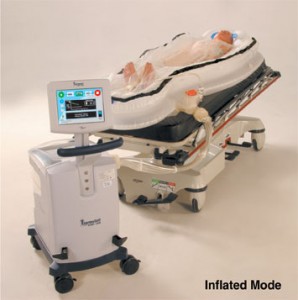 The treatment is called therapeutic hypothermia, and it is relatively new in the medical field. Therapeutic hypothermia involves lowering an unconscious patient’s temperature to between 32 and 34 degrees celsius using a “cooling blanket,” a special cap, or a mattress filled with either air or liquid. The aim of the treatment is to cool the patient’s brain and slow the rate of cell damage, therefore preventing irreversible brain injury or damage.
  According to Francis Dorrity, the Ordonez’s attorney, Emily was admitted to the Bayonne Medical Center at 1:30 am on August 15, 2005 with the beginning pains of labor. All tests showed a healthy baby. But at 9:32am, the machine monitoring the baby’s heart rate showed a rapid drop from 140 beats per minute to a dangerous 60 beats per minute.
  Tiffany Busone and her mother sued the Bellevue Maternity Hospital (now known as the Bellevue Women’s Center) for negligently delivering Tiffany on July 15th, 1984. Tiffany was deprived of oxygen for nearly 15 minutes while doctors failed to properly resuscitate her. She now suffers permanent brain damage because of it.
  Dr. Paul Heltzer and the Staten Island University Hospital were found responsible for the speech probelms, learning disabilities, and reduced life expectancy that Xzavier now faces due to the extended period of time he went without oxygen on the day of his birth.
 Birth Injuries that commonly occur include Cerebral Palsy, Erb’s Palsy, face paralysis, bruises and swelling, Shoulder Dystocia, and brain damage. These injuries are generally brought on by oxygen deprivation and doctor error. Oxygen deprivation is commonly caused by umbilical cord compression, the improper insertion of an oxygen tube, Meconium Aspiration Syndrome (the baby inahles it’s own fecal matter or amniotic fluid), or excessive time spent in the birth canal.
  Eva Liberato was admitted to Westlake Hospital to deliver her baby in 2002. After hours of labor, she was given drugs to help induce contractions and dilation. The drugs caused the baby’s heart rate to slow and, instead of calling for the assistance of an obstetrician, her family doctor attempted to deliver the baby himself using, among other methods, forceps and a vacuum retractor.
  On the day of her daughter Cassie’s birth, Dr. Lisa Yang and her colleagues administered drugs and forced the kind of birth deemed nearly impossible early on in Heather’s pregnancy. The drugs administered were supposed to assist the uterus in contracting, and eventually the baby would be expelled. However, because of her mother’s condition, and because of Cassie’s size, which the doctors failed to consider, Cassie’s head became stuck.