As nursing home abuse attorneys, we realize that prevention is the best medicine. In continuation of our series of nursing home abuse tips to help prevent bedsores and pressure ulcers, we leave the important areas of nutrition and hydration. In this next tip, we address the most important area to help a patient prevent bedsores and pressure ulcers from occurring or worsening.
Tip # 9 for the Prevention of Bedsores and Pressure Ulcers in Nursing Homes
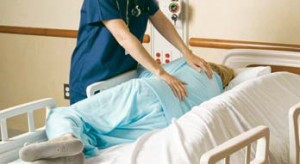 Proper shifting and repositioning is paramount in preventing nursing home patients from acquiring life threatening bedsores and pressure ulcers. According to the National Pressure Ulcer Advisory Panel, bed-bound patients should be repositioned at least every two hours, and chair-bound persons repositioned every hour. Repositioning of nursing home patients to prevent bedsores and pressure ulcers from occurring is so vital to proper nursing home care that it has been mandated by federal regulations. All nursing home staff should be trained in the proper techniques of repositioning and turning in order to prevent pressure ulcers and bedsores in nursing home patients. Sadly, many nursing home care workers are low wage, overworked, and undertrained. Therefore, they often lack this basic nursing home training.
Nursing home patients that are able should be taught to shift their positions every 15 minutes if possible, and they should be reminded and checked on by staff to make sure this is being done. Unfortunately, most nursing homes lack the required staff to provide these basic and simple reminders to the nursing home patients. This lack of care is just another form of nursing home abuse.
What Can Families Do to Protect Their Loved Ones From Such Nursing Home Abuse?
A repositioning chart is a simple and great way to keep track of when a nursing home patient has been repositioned or turned. This chart should be made easily available for family review each and every time they visit. The chart should be in the nursing home patient’s room for easy review. Just the simple task of making sure the nursing home patient is moved regularly, and the charting of such movement to make sure that it is being done on a timely basis, can be the difference between a person developing the awful bedsores and pressure ulcers that result from remaining stationary.
Nursing Home Abuse Lawyers in NJ nd PA
If your loved one is suffering from bedsores or pressure sores in a nursing home or long term care facility, contact the Mininno Law Office for a free case evaluation and free consultation with nursing home expert Donnie Browne. Call (856) 833-0600 in New Jersey or (215) 567-2380 in Philadelphia. Let the Mininno Law Office team earn you your full and fair compensation.
 As a result, Judge Katz is responsible for coordinating all pretrial discovery and litigation concerning the nature of DePuy’s defective hip implant to promote judicial economy, prevent duplication of the same discovery in hundreds of cases, prevent the potential for hundreds of judges each individually ruling on the same issue, and to prevent inconsistent judicial rulings from these judges. The DePuy hip recall multi-district litigation (MDL) is a great way to streamline the DePuy hip recall litigation, conserve judicial resources, and save the parties money.
  The business community is thrilled by the bill the Senate passed this week. Of course they are; the new measures make it harder to get sued! Patient advocates, however, view the bill as a shield for medical providers who injure or abuse in nursing homes, or who practice careless, dangerous, and sub-standard medicine.
 As New Jersey nursing home abuse lawyers, we encourage family members to work with the nursing home staff to make sure all nutritional aspects of the nursing home patient’s diet are examined. This is especially important to prevent these deadly bedsores and pressure ulcers. As the nursing home patient is often unable to get all of his/her nutrition from food alone, multivitamins and minerals may be needed to ensure the proper nourishment. This should be determined by the staff and made available to the nursing home patient. Research has shown that seniors need a variety of multivitamins and minerals to stay healthy, such as Vitamins, E, K, D and C for example. Proper vitamin supplementation should be assessed and determined by the nursing home staff, and then provided to the nursing home patient as part of their daily nutritional plan.
  Most DePuy hip recall patients have had a single DePuy hip replacement. However, many times, an orthopaedic patient will require both hips to be replaced in a surgery called a bilateral hip replacement surgery. Unfortunately, for those patients who have had a bilateral hip-replacement surgery with the recalled DePuy hip implant, the recall is twice as troubling because these patients will require more extensive surgery to remove the two DePuy hips.
  Galecio and Maria Rodriguez sued Dr. Jennifer Friedman and the Northwestern Memorial Physician’s Group after a serious birth injury permanently injured their son Mateo.
 As a New Jersey and Philadelphia
  This
This  Several hospitals in the Netherlands use a checklist called SURPASS to assure that all the proper steps have been taken before a patient goes under the knife. Steps on the list include the confirmation of vital aspects of surgery such as the operating schedule, equipment availability, and surgical site. De Vries and his team found that of all of the medical errors that occured between 2004 and 2005, 29% of them could be attributed to at least one of the steps on the checklist. Additionally, 4 of the 10 deaths caused by medical malpractice could be linked back to the checklist.
 The sixth tip nursing home abuse lawyers offer in preventing bedsores and pressure ulcers is to make sure a nursing home patient has proper nutrition. Many nursing home patients do not get proper nutrition because nursing home staff may be poorly trained, over-worked, or may not fully understand how closely nutrition is related to bedsore and pressure ulcers. Although nursing home staff are required by law to know the many ways to prevent a bedsore or a pressure ulcer, many nursing home staff do not get this training or education from the nursing home. This is not acceptable and is just another form of nursing home patient neglect. Nursing home staff must know the reasons for malnutrition. For example, patients may have difficulty feeding themselves, do not enjoy meals, or are taking medications which upset their stomachs. These patients need specific nutrition assessments to ensure that a bedsore or pressure ulcer will not form.