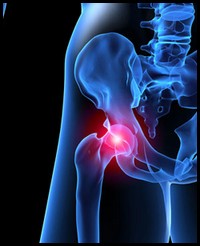
 In the United States, hip replacement surgery is one of the most common orthopaedic surgeries that occurs each year. In fact, since 1997, there have been approximately 300,000 hip replacement surgeries performed in the United States. Without question, the development of prosthetic hip joint replacements, and the development of cement or “glue” to securely place these implant parts into the human skeleton, has been one of the most major advancements in orthopaedic surgery during the last several decades.
Notwithstanding the numbers, as was detailed on our articles about hip implants, hip replacement surgery is not a cure for hip pain and should only be considered after all other medical treatments have failed. The failure of any manufacturer’s hip implant is something that is inevitable and something all potential hip implant patients should consider.
Why are Hip Implant Failures Almost Always Inevitable?
One of the major reasons for hip implant failure is because of the loosening of the bond (i.e., the cement or glue) which holds hip implant prosthetics to the bone. The loosening of this bond between the hip implant parts and the bone causes an increase in pain and reduces the range of motion for the patient.
In addition, because of the “imperfect fit,” natural friction is increased, as is the wearing down of areas in and around the hip implant. While this wear occurs in all hip implants, DePuy ASR hip implants have been recalled because medical research has shown that the recalled DePuy hip implant has an increased wear rate caused by the friction between the chromium and cobalt metals used in the ASR implant system. The combination of the loosening of the bond between the implant parts and the increased friction wear in the DePuy hip implant patient has been theorized to be the main cause of it’s premature wear and tear.
Finally, the byproduct of the chromium and cobalt friction in the replacment has been shown to result in a greater immune response to the release of these metal particles in the blood system. The immune system response not only attacks the foreign metallic matter in the blood stream, but also attacks the surrounding hip and femur bone, as well as other connective structures. This attack further damages the bond between the DePuy hip implants and the bone. This process, called osteolysis, is one of the most common causes of the accelerated failure of any DePuy hip implant.
NJ and PA DePuy Hip Implant Recall Attorneys
A DePuy hip implant recall lawyer in NJ o PA can answer your questions regarding a DePuy hip implant. If you think you may be the recipent of a recalled product, contact the Mininno Law Office for a free case evaluation or call for a free consultation at (856) 833-0600 in New Jersey, or (215) 567-2380 in Philadelphia.
Let the team at the Mininno Law Office earn you the compensation you deserve.
 The hip is a joint between the top of the leg bone (“femur“) and the pelvis bone (“acetabulum“). Hip pain is caused when there is damage to this joint. The main function of the hip joint is to support the weight of a body while standing, walking, or running. Damage can occur for a variety of reasons and cause pain, but, there is no “cure” for hip pain.
 Whenever there is rubbing between two surfaces, there will always be wear and tear. All hip implants will have some wear and tear between the implant and the bone. During surgery, a surgeon will cut out the old hip joint and glue in a new hip joint (implant). These implants will have both a “ball,” which is at the head of the femur, and a “cup,” which is the joint/hip socket. These pieces will rub together and over time, break down.
 If you are one of the unfortunate patients who received the recently recalled DePuy Orthopaedics ASR hip implants, you are probably wondering if there are any time limits to make a claim?
 Give credit to the New York Times for being the first to warn patients and doctors about the potential defects that eventually led to the


 Chromium and Cobalt. These metals are not found in your local vitamin store: Chromium is a chemical element found on the periodic table under atomic number 24. It is used to make stainless steel and all of the shiny parts called “chrome” on automobiles.
 Similarly, Cobalt is also a chemical element found on the periodic table under atomic number 27. Since ancient times, it has been used as a blue pigment to tint glass, jewelry, and furniture.
 What is known is that the recall affects the ASR XL Acetabular System, which is used for total hip replacements, as well as the ASR Hip Resurfacing System, which is used in a newer kind of procedure involving bone conservation.
 With the recent news about the