Nursing Home Abuse Lawyers Provide Tip#10 for Bed Sore Prevention

As nursing home abuse attorneys, we have been posting a series of tips to help the prevention of nursing home abuse and bed sores. Our last few posts concerned the nursing home patient’s need for proper nutrition and hydration, as well as the importance of repositioning. Today’s bed sore tip once again deals with proper positioning of the nursing home patient to prevent a painful and often deadly bed sore. As we have indicated in the past, “Prevention is always the best medicine when it comes to preventing bed sores and pressure ulcers in nursing homes.”

Tip #10: Proper Pressure Redistribution

The 9th tip for the prevention and treatment of bed sores involves making sure that the patient is using the proper materials and mattresses for proper pressure-redistribution. Long term care residents should be using pressure-redistribution mattresses and chair cushion surfaces. new jersey philadelphia nursing home abuse lawyers proper pressure redistributionThese surfaces typically have layers that help provide optimal immersion and comfort for the nursing home patient. These surfaces are designed to have independent zones to provide the correct pressure for each weight range. These surfaces are designed, in fact, to help aid in both the prevention and the treatment of bed sores and pressure ulcers. Redistribution of surface pressue is very important as the pressure causes the small blood vessels in the skin to collapse, which deprives the skin of oxygen and nutrients, causing them to die. Nursing homes should avoid using donut-type devices and most sheepskin products for pressure redistribution. Staff members should be aware of the need for proper surfaces. Not using the proper surface for patients is tantamount to nursing home abuse. The use of the proper pressure-redistributing surfaces along with proper repositioning may be two of the most important bed sore prevention tips that all families should be aware of and vigilant to for the well being of their loved ones.
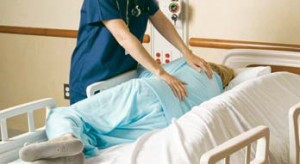
Nursing Home Abuse Lawyers in New Jersey and Philadelphia

If your loved is a resident at a nursing home, and you believe that the treatment they are receiving is below standard, contact the Mininno Law Office for a free case evaluation. We are skilled in earning compensation for families whose loved ones have been mistreated by nursing homes or long term care facilities. You may also call for free consultation at (856) 833-0600 in New Jersey, or (215) 567-2380 in Philadelphia.

Nursing Home Abuse Lawyers with Tip #9 for Bedsore Prevention

As nursing home abuse attorneys, we realize that prevention is the best medicine. In continuation of our series of nursing home abuse tips to help prevent bedsores and pressure ulcers, we leave the important areas of nutrition and hydration. In this next tip, we address the most important area to help a patient prevent bedsores and pressure ulcers from occurring or worsening.

Tip # 9 for the Prevention of Bedsores and Pressure Ulcers in Nursing Homes

new jersey phialdelphia nursing home abuse attorneys constant reposition prevent bedsoresProper shifting and repositioning is paramount in preventing nursing home patients from acquiring life threatening bedsores and pressure ulcers. According to the National Pressure Ulcer Advisory Panel, bed-bound patients should be repositioned at least every two hours, and chair-bound persons repositioned every hour. Repositioning of nursing home patients to prevent bedsores and pressure ulcers from occurring is so vital to proper nursing home care that it has been mandated by federal regulations. All nursing home staff should be trained in the proper techniques of repositioning and turning in order to prevent pressure ulcers and bedsores in nursing home patients. Sadly, many nursing home care workers are low wage, overworked, and undertrained. Therefore, they often lack this basic nursing home training.
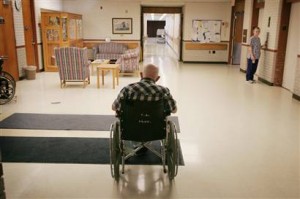
Nursing home patients that are able should be taught to shift their positions every 15 minutes if possible, and they should be reminded and checked on by staff to make sure this is being done. Unfortunately, most nursing homes lack the required staff to provide these basic and simple reminders to the nursing home patients. This lack of care is just another form of nursing home abuse.

What Can Families Do to Protect Their Loved Ones From Such Nursing Home Abuse?

A repositioning chart is a simple and great way to keep track of when a nursing home patient has been repositioned or turned. This chart should be made easily available for family review each and every time they visit. The chart should be in the nursing home patient’s room for easy review. Just the simple task of making sure the nursing home patient is moved regularly, and the charting of such movement to make sure that it is being done on a timely basis, can be the difference between a person developing the awful bedsores and pressure ulcers that result from remaining stationary.

Nursing Home Abuse Lawyers in NJ nd PA

If your loved one is suffering from bedsores or pressure sores in a nursing home or long term care facility, contact the Mininno Law Office for a free case evaluation and free consultation with nursing home expert Donnie Browne. Call (856) 833-0600 in New Jersey or (215) 567-2380 in Philadelphia. Let the Mininno Law Office team earn you your full and fair compensation.

Nursing Home Abuse and Neglect Uncovered by Litigation

A report released by the American Association for Justice, titled “Standing up For Seniors: How the Civil Justice System Protects Elderly Americans”, tells of how the Civil Justice System is the only weapon senior citizens and their families have in the fight against abusive and negligent care in nursing homes and long term care facilities.

A Nursing Home is a Business

new jersey philadelphia nursing home abuse attorneys neglect uncovered litigationWe’ve talked before about how nursing homes are businesses; big businesses with corporate agendas and money hungry CEO’s. Today, these corporations are wide-eyed at the thought of an influx of baby boomers entering their facilities. This prospect of large profits has caused a major drop in the level of care provided to our elderly loved ones.

Approximately 1.5 million Americans are currently enrolled in a nursing home or long term care facility program. Unfortunately, a number of these residents will suffer, or already have suffered, from nursing home abuse and negligence.
Bedsores, chemical restraints, dehydration, malnourishment, physical and verbal abuse, co-resident violence, fraud, medical errors, and unsafe facility conditions, are all potential threats to your loved one’s health and well-being while a resident at a nursing home.

Nursing Home Abuse Attorneys Working to Reveal Abusive Facilities

Regulatory and legislative bodies have passed many laws protecting the rights of senior citizens, but it seems that our judicial system is the only system uncovering the many events of abuse and neglect. Without nursing home abuse attorneys, too many instances of subpar care would go untold, especially since nursing homes are sticking mandatory arbitration agreements in their huge packets of admission documents and failing to explain that those agreements remove resident rights to a jury trial.
American Association for Justice President, Gibson Vance, comments:

“Corporate nursing homes and insurance companies have continually chosen to put profits ahead of the well-being of our most vulnerable population. Where regulatory and legislative bodies have been unable to cope with this distressing rise of neglect and abuse of our elderly, the civil justice system has stepped into the breach.”

NJ and PA Nursing Home Abuse Attorneys at the Mininno Law Office

The nursing home abuse attorneys at the Mininno Law Office are dedicated to eradicating the disturbing trends of abuse and negligence in our nation’s nursing homes.
If you or your loved one have suffered due to nursing home abuse or neglect, contact the Mininno Law Office for a free case evaluation, or call for a free consultation at (856) 833-0600 in New Jersey, or (215) 567-2380 in Philadelphia.

Let the team at the Mininno Law Office earn you the compensation you deserve.

Needed Nursing Homes Struggling to Stay Open

When our loved ones are no longer able to take care of themselves and we have tried but we do not have the right medical care or the time to give them the assistance they need, nursing homes are where we turn. We depend on nursing homes to take care of our loved ones in the best way possible. We expect our loved ones to be treated well, with compassion and to be given the proper medical care as well. Due to the national recession and health reform cuts of $16 billion in Medicare plans, there are many nursing homes struggling to stay open. The nursing homes that are able to avoid bankruptcy and other problems have to make cuts on staff and proper training which leads to nursing home abuse, bed sores, and other types of neglect. We need a place for our elderly loved ones to feel safe and cared for without having to worry about their health and proper medical care. Even states that have been given extra funding for nursing home care are soon going to run out. It is important that we recognize that there is still a need for nursing homes and that we do something to save them and provide better medical care and services in them as well. Our loved ones and their lives may depend on it the way they depend on us.

If you would like to do something to save the nursing homes, you can write a letter to your congressman or attend a local town meeting and tell people how you feel and the importance of nursing homes.

For more information on nursing homes that are struggling, you may visit this web.

If you feel that your loved ones are a victim of nursing home abuse or neglect, contact a nursing home abuse lawyer right away. They will help you get the rights and care for your loved one that they deserve to have.

Nursing Home Training Tips to Prevent Abuse

Every day millions of nursing home patients face abuse because many nursing home put profits over patients.  As a result, many nursing homes are understaffed and have overworked, underpaid and unqualified employees. In particular, many nursing home employees are not trained to properly care for and treat bed sores due to incontinence, poor nutrition, and immobility. Many goverment agencies and organizations, including the Agency for Health Care Policy and Research, have studied and evaluated ways to better train employees at nursing homes and other assisted living facilities to help prevent bed sores and pressure ulcer, as well as many other types of nursing home abuse faced by millions of patients every day. Although, the first concern should be patient care, unfortunately money usually comes before the care of a patient.  Clearly, with proper training and care of nursing home employees, much of the abuse we see can easily be prevented.

For example, nursing home employees should be trained to properly asses patients  with immobility problems such as those in a wheelchair or those who are bed bound. The evaluation of these patients should include plans for:

·a special diet plan

·Being repositioned or turned at night to reduce or prevent bed sores.

·A daily exercise routine

·Regular skin and hygiene evaluations

Regular bathing and cleansing of bed bound or wheelchair bound individuals can also help reduce or prevent bed sores and other types of abuse. Problems should be noted and written down on a weekly or monthly report. If a nursing home patient develops a malnutrition problem the first step that needs to taken is an evaluation of the food they have been eating and careful evaluation after adding more calories and nutrients.

Many times, the employees want training, but can not afford to do so.  Clearly, nursing homes and assisted living facilities should provide training classes to nursing home caregivers at little or no cost so that they can learn the proper ways to reposition, transfer and help a bed bound or wheelchair bound patient to help prevent bed sores or pressure ulcers.

Below are simple and general guidelines and training tips that can help to prevent nursing home abuse for millions of patients every day. Patients and their care should be priority number one; if not, patients need to have nursing home lawyer, someone fighting for their rights to proper medical care and abuse prevention.

If you feel that you or your loved ones rights have not been respected or you have been a victim of nursing home abuse, please contact a nursing home abuse attorney right away and let a nursing home lawyer help you fight for your rights and your loved ones.

To read additional information about the guidelines provided by the Agency for Health Care Policy and Research and the National Libary of Medicine, you may visit the following website:

http://www.ncbi.nlm.nih.gov/books/bv.fcgi?rid=hstat2.chapter.4409

New Jersey Governor Signs bill concerning Patient Safety


When a Patient goes in to the hospital, they expect and deserve to receive the proper medical care and attention. Most patients believe they will be better when they leave the hospital than when they came in to the hospital. Unfortunately, there have been many times where a patient comes in with one illness or problem and leaves with a new and different illness because of medical malpractice.  For example, otherwise healthy patients have been known to leave hospitals with factures, punctures, transfusion reactions, drama from birth and even surgery done in the wrong place. This has caused many patients much more worry and pain than before they entered a hospital.

 New Jersey is now one  of the first States to take action on this problem  In fact the Governor of New Jersey signed a bill yesterday, August 31, 2009 that will require the Department of Health and Human Services to report safety measures for patients on a hospital by hospital basis. This bill will also help protect patients from being charged for a hospital’s medical error.  This bill means that each hospital and all their procedures will be checked and reported on annually and then additional safety indicators may be regulated by the Commissioner of Health and Senior Services. The Department of Heath and Senior Services will include the following patient safety indicators in their reports:

  • forgein body left during a procedure
  • post operative hip facture (a facture after surgery)
  • latrogenic pneumothorax
  • postoperative hemorrhage or hematoma
  •  postoperative deep vein thrombosis or pulmnary embolism
  • postoperative sepsis
  • postoperative wound hiscence
  •  accidental pucture or laceration
  • transfusion reaction
  • Obstetric trauma- vaginal delivery with instrument
  • Obstetric trauma- vaginal delivery without instrument
  • air embolism
  • surgery on the wrong side, wrong body part, or wrong person, or wrong surgery performed on a patient

This list consists of concerns and conditions that can happen to a patient if the hospital is not following safety regulations. Some of these are minor and some of them are very serious. Never the less, they are all very important are things that should “never” happen in a hospital. They are called the “never events” for this reason.

 The Commissioner may consider recommendations from the Centers for Medicare and Medicaid, as well as the Commissioner requesting studies from the Quality Improvement Advisory Committee on how to get public reports on patient infections, bed sores,  ulcers, or falls by patients while in hospital care. 

This bill signed by the Governor yesterday on August 31, 2009 is another step towards better patient rights and patient care. After all, when you enter a hospital as a patient you should know that you are getting the best care possible. If you are not, you should be able to fight for your right to better patient care and services.

If you feel that your rights have been violated under this new bill, contact a New Jersey Malpractice lawyer,  right away for help regarding your rights.

 For more information regarding this bill and your rights you may visit:

New Jersey State Legislature


A Quarter of Nursing Homes Flunk the Test

In mid December, the federal government unveiled its new rating system, which it uses to help advise the public on the quality of care they are receiving from their local area nursing homes. This system will help individuals make informed decisions about the institution they trust with the care of their loved ones.

Under the new system, five stars means a nursing home ranks “much above average,” four stars indicates “above average,” three means “about average,” two is “below average” with a one indicating “much below average.” The rankings will be updated quarterly. Senator Herb Kohl of Wisconsin stated that the new ranking system would help bolster transparency, which is, “…the key when it comes to nursing home quality.”

Unfortunately, along with the progress of informed decision making came the shocking realization that almost a quarter of all nursing homes in the country have been given the federal government’s lowest possible rating: one out of five stars. Receiving such a low rank in particular had to do with the high percentage of patients with bedsores after their first 90 days in the nursing home and the number of residents whose mobility worsened after admission.

When nursing homes are understaffed, over worked, and improperly trained, the results can be catastrophic. Where there is lack of individual patient attention, pressure sores and decreased mobility are sure to follow. When it comes to protecting your loved ones, please pay strict attention to the federal rating system. Alice Hedt of the Insititute for Nursing Home Reform states that, “Our initial reaction is that consumers should probably avoid any facility with a one- or two-star rating and even a three-star rating unless people they trust convince them that the rating is inaccurate or unfair.” However, the rating system alone is not enough to properly judge. Ms. Hedt advises that, “…Nothing should substitute visiting a nursing home when making a decision.”

If you are in the process of finding a nursing home for your loved one, please pay strict attention to the federal ranking system. If you have a family member already in a nursing home, please remember to check on them regularly. Bedsores are a life threatening injury, and should be checked for regularly. If your family member has been subject to bedsores due to a lack of proper care, please contact an attorney to help remedy the situation as fast as possible.

Related Information:

New Jersey Lawyers – Nursing Home Abuse

Is Grandma Safe in the Nursing “Home” for the Holidays? Safety violations reported in 94% corporate nursing homes

“More than 90 percent of nursing homes were cited for violations of federal health and safety standards last year, and for-profit homes were more likely to have problems than other types of nursing homes, federal investigators say in a report issued on Monday.” Robert Pear, The New York Times

The Department of Human Health and Services has found nearly 94% of for profit nursing homes, many run by large corporations, have been cited for safety violations.This statistic is appalling, considering the millions dollar profits being made by these nursing homes. For the year 2008, nursing homes charge families $77,380 on average for a room and $36,372 for assisted living rooms.With costs increasingly rising, poor patient care and frequent violations are inexcusable.

If it wasn’t bad enough that these corporate nursing homes drastically overcharge, for the quality of care they provide, they are also supplementing their profits by overcharging taxpayers.Inspector General of the Department of Human Health and Services said he had found some cases in which nursing homes billed Medicare and Medicaid for services that, “were not provided, or were so wholly deficient that they amounted to no care at all.”

The decision to place a member of your family in a nursing home or assisted living is difficult, but often necessary.If you currently have a family member in assisted living or a nursing home, please make sure that someone you trusts checks them regularly to ensure that the home is providing proper care.Never hesitate to ask the staff any question, and always bring up any concern you have.Write down the names of the individuals with whom you speak.Do not let nursing home staffs tell you that you are worrying too much.When it comes to the care of your family, you can never be cautious enough. Finally, remember that neglect and abuse has many signs, some of which can be hard to immediately detect.Every time you visit your family member, be sure to always check the following by talking to the staff, and making your own observations: 1. be sure that there are no signs of bruising on your family member from possible abuse, 2. make sure that they are receiving the proper and necessary medication and nutrition, 3, makes sure that the staff is frequently monitoring that there are no bed or pressure sores developing, and 4. make sure that nursing home staff is capable of responding immediately to an emergency situation.

If you suspect abuse, you can report it to the local regulatory authorities:

In Pennsylvania you can go to the Office of Aging website

http://www.aging.state.pa.us/aging/site/default.asp

In New Jersey, contact the Adult Protective Services

http://www.state.nj.us/health/senior/aps.shtml

Contact a Medical Malpractice Lawyer in New Jersey

Contact a Medical Malpractice Lawyer in Pennsylvania

Contact a Nursing Home Abuse Lawyer in New Jersey

Contact a Nursing Home Abuse Lawyer in Pennsylvania

Patient’s advocate to preventing bedsores

Whenever a patient is in a nursing home, that patient is at risk of developing a bedsore. Although there are both and federal and state guidelines specifically designed to prevent bed sores, many nursing homes and hospitals have failed to follow these guidelines. As a result, nursing home patients are developing bedsores at an alarming rate. This article is designed to help patients and their families prevent bedsores when in a nursing home.

First, some background. What is a bedsore? A bedsore is skin and tissue that has died because it has not received sufficient oxygen from the body. Since blood carries oxygen to all parts of our body, a bedsore is developed when the blood vessels that feed the skin are compressed or damaged in some manner.

The compression or damage prevents the blood from reaching the skin and the skin cells begin to die. If the blood supply continues to be damaged or compromised, more tissue will die. Eventually, the blood supply compromise can infect the underlying tissue, bones and joints. It takes as little as two (2) hours of sustained blood flow compromise to begin this process.

Bedsores are common in the lower back, buttocks and on other boney protrusions that routinely come in contact with a patient’s bed. Although every patient in a nursing home is susceptible to bedsores, the majority of cases are easily preventable. The United States Department of Health and Human Services has published clinical guidelines for bedsore prevention since 1992.
These guidelines can be found at this website

In addition, all nursing homes are required to enact, publish, and follow similar guidelines to prevent bedsores. Despite longstanding published guidelines, why is it then that nursing home patients continue to develop bedsores resulting in hospitalizations, medical complications and, in some instances, death?

Basically, the failure of healthcare facilities to employ enough qualified staff members is the primary reason for the high incidents of bedsores. Typically, licensed practical nurses that work in a nursing home setting are less experienced and cheaper to employ when compared to registered nurses. Furthermore, the resident to nurse ratio is very high. The nurses are simply unable to spend the necessary amount of time with each patient to ensure that the guidelines are being followed. Sadly, understaffing at nursing homes is a serious problem that leads to patient neglect.

For example, many residents are immobile and unable to regularly reposition themselves while lying in bed. The guidelines require nurses and aides to physically move these patients every few hours to prevent bedsores. Unfortunately, by the time an overwhelmed nurse gets around to checking on the resident, the two-hour time frame in which a bedsore can develop has already expired.

Similarly, bedsores are also caused by prolonged exposure of the skin to moisture. It is no wonder then that patients who are left to sit for hours in urine soaked diapers and sheets quickly develop bedsores in places that go unnoticed by the nursing home staff and family members alike. Sadly, the situation spirals out of control and the resident suffers because the staff could not make time to provide them with dry diapers and sheets.

So, what should patients do to prevent these devastating injuries? Fortunately, nursing homes fear the civil tort system where juries can hold them financially accountable for failing to follow the guidelines. Family members should not hesitate to seek legal advice if their loved one develops a bedsore. In addition, family members should go to the web, print up several copies of the guidelines and bring them to the nursing home. Family members should sit down with the nursing home’s medical director to ensure that the guidelines are being followed with respect to their loved one. They should leave a copy of the guidelines prominently displayed on the resident’s bedside table. Finally, family members should follow-up in writing asking the director of medicine and nursing if the guidelines are being followed on an every other-day basis.

The real key is involvement. Family members cannot sit back and blindly trust that their loved ones are in good hands. Most residents are already in poor health when they enter a nursing home facility. Therefore, any neglect can have serious physical consequences. It is only by being a patient advocate in the manner set forth above that family members can ensure that their loved one is receiving the federally and state mandated required bedsore prevention care.

In order to prevent other potential abuses in nursing homes go to our nursing home abuse or our bed sore prevention web pages.

John R. Mininno, Esq. is a New Jersey and Pennsylvania trial lawyer representing clients in medical malpractice, defective products and other serious injury claims. He also writes about issues concerning patient safety. His offices are in Collingswood, NJ and Philadelphia, PA.