Four year old Rebecca Riley died in 2007 from an overdose of psychiatric drugs prescribed by her psychiatrist. Her parents are in jail for her murder. The medical malpractice claim her estate filed settled for $2.5 million, and the money will be dispursed among her siblings. What happened to young Rebecca Riley?
ADHD and Bi-Polar Disorder in a Four Year Old?
Rebecca Riley was seeing Dr. Kayoko Kifuji of Tufts Medical Center in Boston, Massachusetts to be treated for Attention Defecit Hyperactivity Disorder, as well as Bi-Polar Disorder, at age four. Her siblings, 11 and 6, were being seen by the same doctor and being treated for the same diseases. While ADHD is a common diagnosis in rambunxious children, Bi-Polar Disorder is uncommonly diagnosed before the age of 25. A red flag should have gone up immediately when 3 children in the same family under the age of 15 were being treated with serious mood altering drugs for illnesses they very well may not have had.
 During litigation, Dr. Kifuji testified (in return for immunity from prosecution) that she had been fooled by the children’s parents, Carolyn and Michael Riley, who lied about symptoms and mental conditions in order to collect federal disability checks for their offsprings’ alleged behavioral and mental disorders. Many questioned why, after indications that the Rileys could be harming their children, Dr. Kifuji didn’t do more to protect the youngsters.
Carolyn and Michael Riley were tried and convicted last year in seperate trials for murdering their daughter by way off reckless dispensing of prescription drugs.
Tufts Settles for $2.5 Million
Lawyers for Rebecca’s estate decided to settle for Kifuji’s insurance company’s max of $2.5 million to spare the surviving Riley children the drawn out and painful process of a trial. The money will be split up amongst the two children, who have lost their sister, and whose parents are now in jail. Part of the settlement also required Tufts to set up educational and outreach programs for families with children suffering from mental illnesses.
Medical Malpractice Lawyers in New Jersey and Philadelphia
It’s hard to say who was more negligent regarding the death of young Rebecca Riley. While her parents certainly acted with extreme depravity, Dr. Kufuji, equipped with years of medical education and training, should have been able to spot lies and correctly diagnose the Riley children. Had she acted more pro-actively, perhaps this horrible tragedy never would have taken place.
If you or a loved one have been affected by the actions of a negligent doctor or medical provider, contact the Mininno Law Office for a free case evaluation. You may also call for a free consultation at (856) 833-0600 in New Jersey, or (215) 567-2380 in Philadelphia. Don’t let careless medicine go unpunished.
The Mininno Law Office team can earn you the compensation you need and deserve.
 Olivia Cull underwent surgery as a baby that left one side of her heart smaller than the other. She lived her life this way, until she was a senior in high school. Doctors wanted to install a catheter in her heart to prep for the final surgery that would correct the small side of her heart. She was nervous, but her mother reassured her that the catheterization procedure would only take a few hours, and that she had done it many times before. Doctors told the Culls Olivia would be home before dinner.
 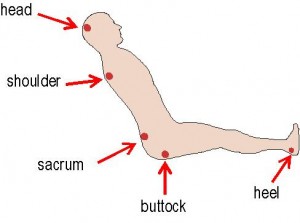 Bed sores result from prolonged pressure that prevents proper blood flow to tissues, which, in turn, kills that tissue. The death of this tissue most often occurs when it is compressed between a bony prominence and an external surface, i.e. bed, wheelchair, or sometimes even other parts of the body. Some of the worst bed sores that occur in nursing home patients don’t even occur from those that are bed ridden as the name suggests. Prolonged sitting in a wheelchair can lead to bed sore development. It is important that nursing home staff members are equally vigilant with their nursing home patients in wheelchairs and in beds.
 These surfaces typically have layers that help provide optimal immersion and comfort for the nursing home patient. These surfaces are designed to have independent zones to provide the correct pressure for each weight range. These surfaces are designed, in fact, to help aid in both the prevention and the treatment of bed sores and pressure ulcers. Redistribution of surface pressue is very important as the pressure causes the small blood vessels in the skin to collapse, which deprives the skin of oxygen and nutrients, causing them to die. Nursing homes should avoid using donut-type devices and most sheepskin products for pressure redistribution. Staff members should be aware of the need for proper surfaces. Not using the proper surface for patients is tantamount to nursing home abuse. The use of the proper pressure-redistributing surfaces along with proper repositioning may be two of the most important bed sore prevention tips that all families should be aware of and vigilant to for the well being of their loved ones.
  Fortunately, the medical future involving artificial joint replacement looks bright. Notwithstanding the failure of the DePuy hip implant, scientists, metallurgists, and researchers are constantly searching for better options for joint replacement patients. Unfortunately, companies like DePuy Orthopaedics and Johnson & Johnson have a financial incentive to be the first manufacturer to get their products on the market. As such, it must be questioned whether this profit motive causes manufacturers to put medical devices on the market before conducting long term studies about the product. In the case of DePuy, it appears that there were no long term studies regarding the wear and tear of the implant before the product was released into the market. Perhaps DePuy and Johnson & Johnson hoped that the chromium and cobalt metal parts in the hip implant would not pose a problem to potential patients.
  In Pennsylvania, late-term abortions, or abortions after 24 weeks, are illegal. However, Dr. Gosnell, with no certification in obstetrics or gynecology, was performing them out of his office. These late-term abortions often resulted in the birth of living fetuses. It is alleged that Dr. Gosnell and his staff would then kill these fetuses by “plunging scissors into their spinal cords.” (Weisenberg, Brin Wall Street Journal 1/20)
  Proper shifting and repositioning is paramount in preventing nursing home patients from acquiring life threatening bedsores and pressure ulcers. According to the
  As a result, Judge Katz is responsible for coordinating all pretrial discovery and litigation concerning the nature of DePuy’s defective hip implant to promote judicial economy, prevent duplication of the same discovery in hundreds of cases, prevent the potential for hundreds of judges each individually ruling on the same issue, and to prevent inconsistent judicial rulings from these judges. The DePuy hip recall multi-district litigation (MDL) is a great way to streamline the DePuy hip recall litigation, conserve judicial resources, and save the parties money.
  The business community is thrilled by the bill the Senate passed this week. Of course they are; the new measures make it harder to get sued! Patient advocates, however, view the bill as a shield for medical providers who injure or abuse in nursing homes, or who practice careless, dangerous, and sub-standard medicine.
 As New Jersey nursing home abuse lawyers, we encourage family members to work with the nursing home staff to make sure all nutritional aspects of the nursing home patient’s diet are examined. This is especially important to prevent these deadly bedsores and pressure ulcers. As the nursing home patient is often unable to get all of his/her nutrition from food alone, multivitamins and minerals may be needed to ensure the proper nourishment. This should be determined by the staff and made available to the nursing home patient. Research has shown that seniors need a variety of multivitamins and minerals to stay healthy, such as Vitamins, E, K, D and C for example. Proper vitamin supplementation should be assessed and determined by the nursing home staff, and then provided to the nursing home patient as part of their daily nutritional plan.